



Industry 4.0: the Fourth Industrial Revolution in action – how Modular System built the factory of the future
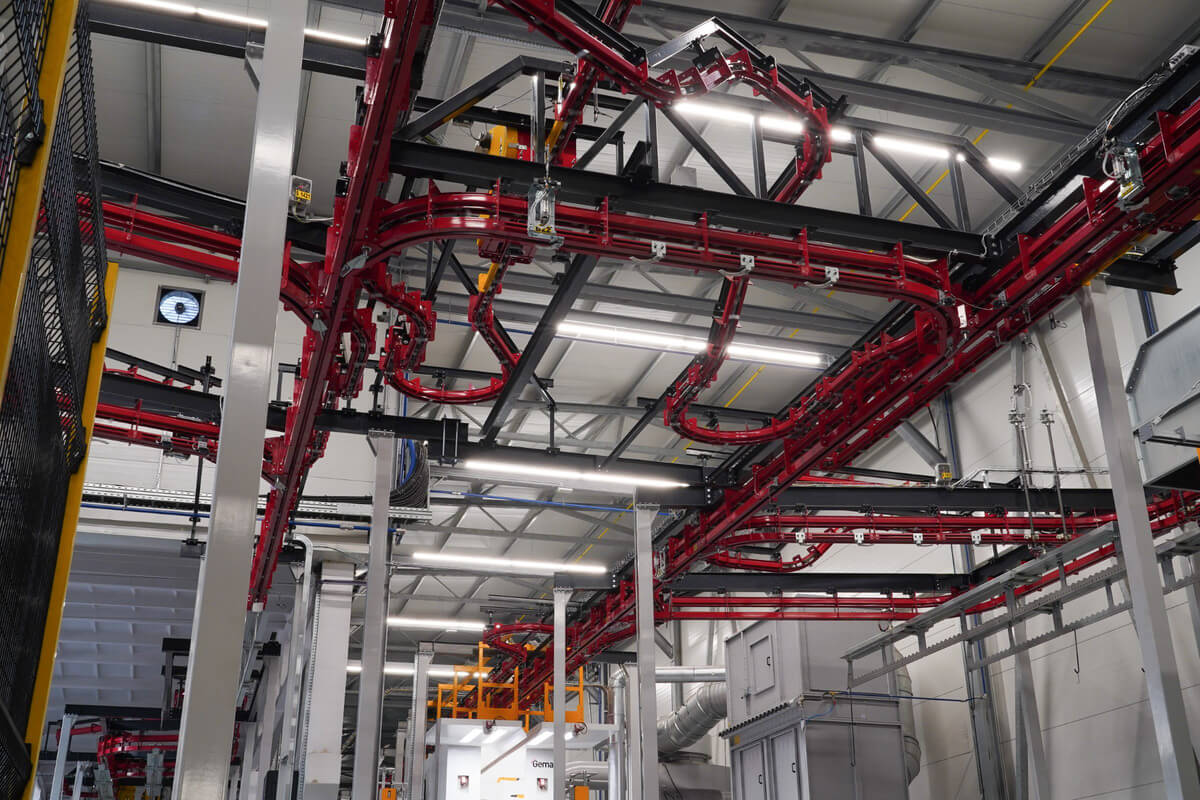
Imagine a manufacturing facility where a new building module comes off the production line every seven minutes. Twenty-four hours a day. Without interruptions. Without errors in repetitive operations. This is not a vision of the future. It is everyday reality in Ogorzelice, where Modular System has built one of Europe’s most advanced manufacturing facilities, fully powered by Industry 4.0 technologies.
What is Industry 4.0?
Industry 4.0 is the Fourth Industrial Revolution, which has transformed the way manufacturing is conceived in the 21st century.
First unveiled at the Hannover Messe trade fair in 2011 as a strategic programme launched by the German government, the concept quickly evolved into a global framework for the digital transformation of manufacturing operations.
While the Third Industrial Revolution introduced computers and basic automation, the Fourth Industrial Revolution integrates intelligent machines, the Industrial Internet of Things (IIoT), artificial intelligence and real-time data into a single, autonomous production ecosystem.
For manufacturing companies, this represents a fundamental shift: from reactive management – dealing with equipment failures, counting defects after they occur and manually scheduling production shifts – to predictive management, where systems issue alerts, make adjustments and continuously optimise performance.
Key technologies of Industry 4.0
The Fourth Industrial Revolution is not built around a single technology. Instead, it relies on a network of interconnected solutions that work together to create smart factories. The key technologies underpinning Industry 4.0 include:
- Automation and robotics – autonomous robots and collaborative robots (cobots) perform repetitive and highly precise tasks, improving productivity while reducing the risk of error.
- Industrial Internet of Things (IIoT) – a network of connected machines, sensors and controllers that exchange data automatically, without requiring human involvement.
- Artificial intelligence and machine learning – algorithms that analyse large volumes of data in real time, predict equipment failures and optimise production workflows.
- Cloud computing and edge computing – data platforms accessible from anywhere, capable of processing information with minimal latency.
- Automated warehouses and CNC systems – digitally controlled precision machining solutions that perform critical operations with no human intervention.
A defining feature of the entire ecosystem is the use of real-time data. The continuous flow of information – from every sensor, every robot and every stage of the production process – enables manufacturers to unlock the full potential of automation and make decisions within seconds.
Importantly, the digital transition to Industry 4.0 should be underpinned by robust cybersecurity measures, including appropriate safeguards for data and cloud-based services. Why is this so important? Because cybersecurity is essential for protecting interconnected systems from cyber threats in a highly digitalised environment. Its role within manufacturing organisations is becoming ever more critical, as operational technology systems can create potential entry points for malware.
How does artificial intelligence optimise production in real time?
Artificial intelligence is transforming the way manufacturing processes are managed. AI and machine learning enable machines to learn from experience. With every hour of operation, algorithms become more accurate and their predictions become increasingly reliable.
In practice, this means:
- Predictive maintenance – the system continuously monitors the vibration levels, temperature and energy consumption of each machine in real time, alerting operators to potential failures before they can bring the production line to a halt.
- AI-powered quality control – machine vision systems instantly detect anomalies and missing components on the production line, reducing rejects to virtually zero without slowing production down.
- Scheduling optimisation – machine learning algorithms analyse data from across the entire plant and automatically recommend the sequence of operations.
The implementation of artificial intelligence leads to higher productivity and fewer production errors. This, in turn, translates directly into time and cost savings, while also enabling more efficient management of raw materials and energy consumption.
Modular System Factory – Industry 4.0 in numbers
This is where theory becomes reality. The Modular System manufacturing facility in Ogorzelice, covering 83,000 m², is living proof that the digital revolution in Polish industry is not a distant vision of the future. It is a reality, demonstrated every day through production performance.
| Production time per module | 7 minutes |
| Daily production | 200 |
| Monthly production | 4,000 modules |
| Monthly modular floor area produced | 57,600 m² |
| Monthly steel processing volume | 3,000 tonnes |
These figures are only possible thanks to the full implementation of key Industry 4.0 technologies at every stage of the manufacturing process.
The automated production line – step-by-step
The transformation of manufacturing processes at Modular System encompasses the entire production journey – from a sheet of steel to a completed module ready for delivery to the customer. Every stage is digitally integrated and optimised to ensure uninterrupted production flow and eliminate downtime.
| 1. | Automated steel storage facility | Capacity: 1,500 tonnes The system automatically selects and delivers the required steel grade and dimensions to the next stage of production, eliminating the need for manual forklift handling and virtually removing the risk of picking errors. |
| 2. | CNC machining and press braking | Precision prefabrication of structural frames and components. Advanced CNC technologies remove the inaccuracies inherent in manual cutting, ensuring every component is manufactured with repeatable precision to within tenths of a millimetre. |
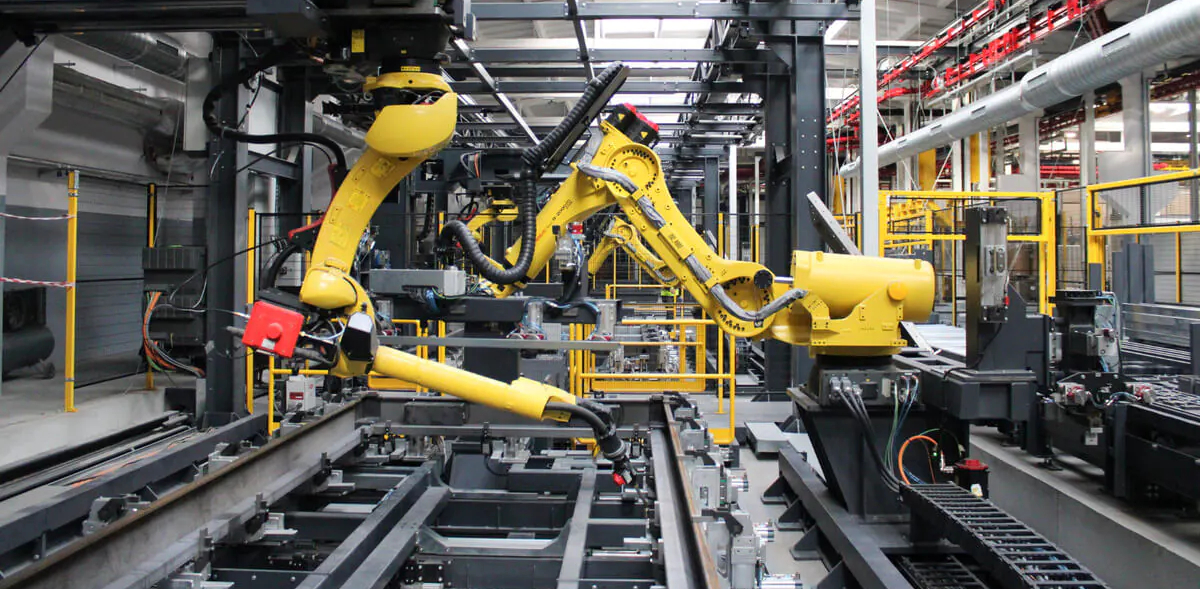
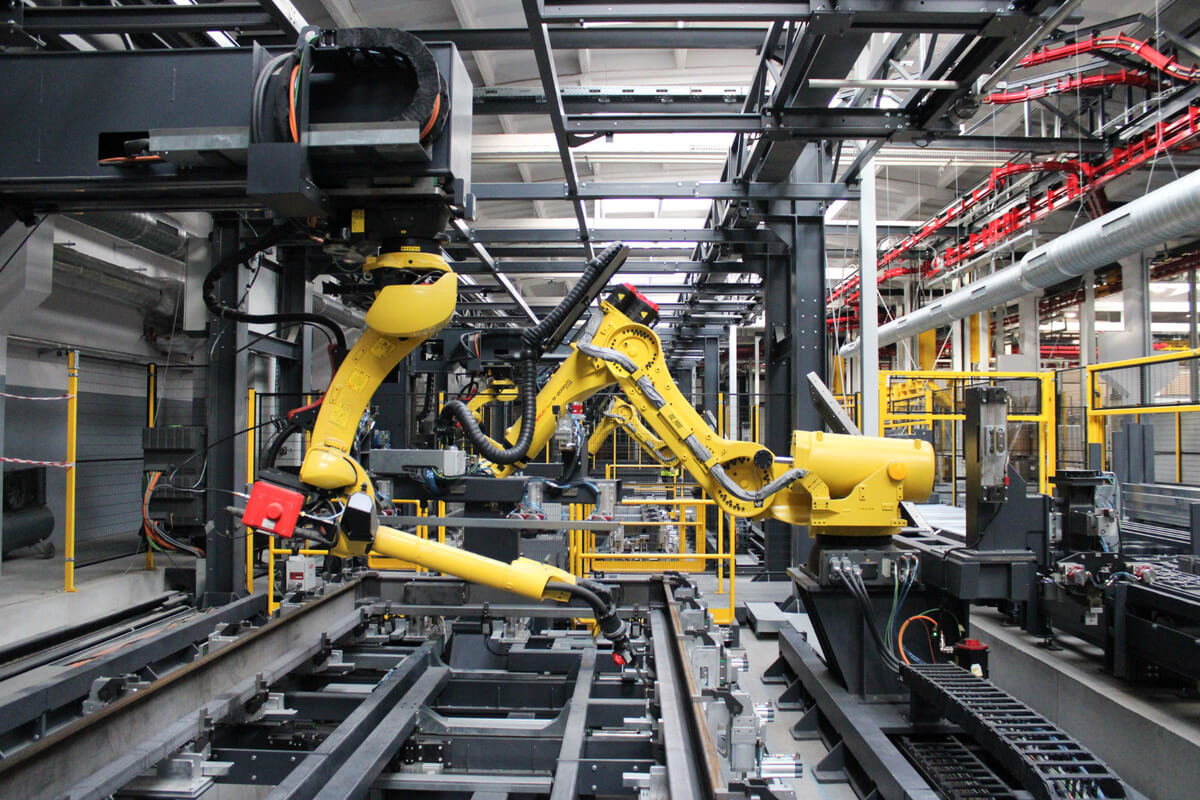
| 3. | Automated welding cells | Seventy FANUC industrial robots perform welding operations in automated welding cells. Robotic welding is one of the most critical areas where technology directly contributes to the structural quality of every module, while ensuring compliance with the requirements of the EN 1090-2:2018 certification standard. |
| 4. | Automated shot blasting chamber | Shot blasting is carried out in a fully automated, enclosed chamber, eliminating employee exposure to hazardous conditions while ensuring complete control over process parameters. |
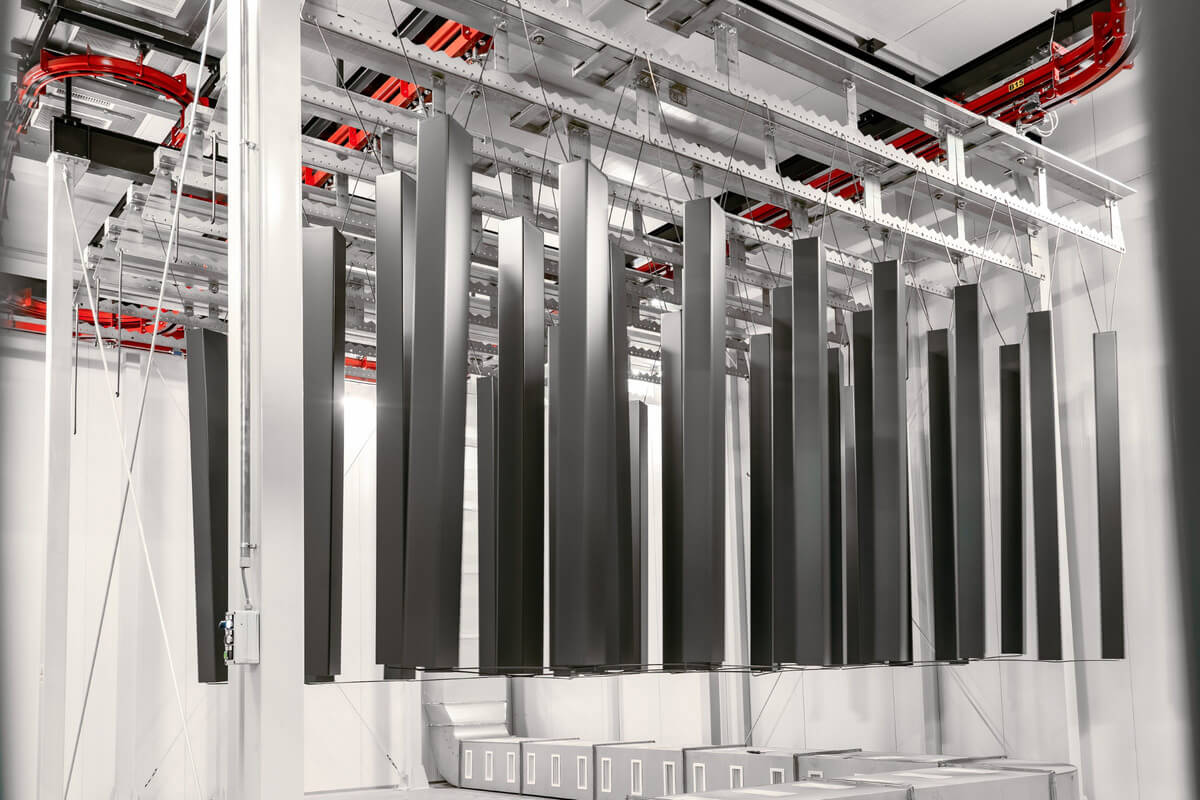
| 5. | Automated powder coating facility | Carefully controlled temperature and humidity levels guarantee a long-lasting finish across every module – whether it is an office unit or a military container. |
| 6. | Assembly and installation | Modules are assembled and equipped with the necessary electrical, plumbing and HVAC installations on a structured production line, where every stage is sequenced and monitored to ensure complete execution and quality. |
Production quality measured by certificates
Industry 4.0 cannot exist without rigorous quality control. At Modular System, the automation and digitalisation of manufacturing processes go hand in hand with the highest quality standards, verified through independent certification:
- ISO 9001:2015 – Quality Management System covering the entire manufacturing process.
- AQAP 2110:2016 – NATO quality management requirements, recognised as one of the most demanding quality standards in industry.
- NATO NCAGE (NATO Commercial and Government Entity Code): 3384H.
- EN 1090-2:2018 and EN ISO 3834-2:2006 – TÜV Rheinland certification confirming welding qualifications.
- REI 60 fire resistance testing – conducted in accordance with PN-EN 1365-1 and PN-EN 1365-2 standards.
Comprehensive production certification is possible because every process parameter is measured, recorded and verified in real time – a core principle of the Industry 4.0 approach to quality assurance.
What does Industry 4.0 mean for Modular System customers?
The implementation of Industry 4.0 technologies across Modular System’s manufacturing facility delivers tangible benefits directly to customers. The Industry 4.0 solutions used in Modular System’s production process translate into clear benefits for customers:
- Speed – 4,000 modules produced per month, with a new module completed every 7 minutes. Example: a container village delivered for the Government Strategic Reserves Agency (RARS) (delivery time: 6 weeks; operational readiness: within 24 hours of deployment).
- Repeatability and quality – robotic welding and automated process control eliminate the variability typically associated with manual manufacturing.
- Scalability – the ability to deliver anything from 5 modules (a car showroom) to 2,500 modules (a worker accommodation complex for Orlen) within a single production system and on a single manufacturing line.
- Reliability of logistics – proven under the most demanding conditions, including the delivery of 110 containers per day during the crisis at the Polish-Belarusian border.
The automation and robotisation of Modular System’s manufacturing processes enable faster production without compromising on quality.
New opportunities: what Industry 4.0 means for the future of modular container manufacturers
The adoption of Industry 4.0 enhances business competitiveness by streamlining manufacturing processes and improving service quality.
The fourth industrial revolution is already underway. And it is showing no signs of slowing down. Emerging capabilities such as fully automated internal logistics and AI-driven, real-time materials procurement will soon become standard practice rather than innovation. Manufacturers that have already established the necessary technological foundations will be well positioned to adopt these innovations seamlessly. Those that fail to do so will find themselves falling further and further behind.
Modular System has built its facility in Ogorzelice as a scalable manufacturing platform, equipped with 70 FANUC industrial robots, an automated steel storage facility with a capacity of 1,500 tonnes, and a production capability of 4,000 modules per month. This enables the company to deliver multiple projects simultaneously across different markets and industry sectors. This is the result of a strategic decision to treat Industry 4.0 not as a one-off implementation project, but as the very DNA of the entire manufacturing organisation.
Read how this technology has driven the company’s growth story: how we scaled from 450 to 4,000 modules per month. Discover the values that define Modular System and explore our certifications. And if your project demands scale, precision and reliable delivery, start working with us or design your facility using our modular configurator.
Think modular. Build modular.
FAQ
Does the automation of modular construction manufacturing reduce employment opportunities?
This is a question that arises with every wave of automation, and the answer is always more complex than a simple “yes” or “no”. At Modular System, robots have taken over repetitive, highly precise and often hazardous tasks, such as welding in confined spaces, shot blasting and powder coating. At the same time, demand has grown for system operators, CNC programmers, maintenance engineers and quality assurance specialists.
Can modules produced on an automated production line be customised?
Automation does not mean a lack of flexibility. It means consistent quality while maintaining a high degree of configuration flexibility. The Modular System production line can manufacture everything from standard office and residential units to specialised medical modules equipped with oxygen systems, military modules meeting NATO requirements, and energy-efficient buildings featuring photovoltaic installations and smart home technology.
What exactly does “one module every 7 minutes” mean? Does the production line operate continuously around the clock?
The 7-minute figure refers to the cycle time of the optimised production line, while the output of 200 modules per day reflects its maximum production capacity. In practice, the facility operates on a multi-shift basis, with each stage carefully sequenced to ensure that no robot is left waiting for the previous process to be completed. This reflects a core Lean Manufacturing principle applied in an Industry 4.0 environment: eliminating wasted time at every stage of the production chain.